Skip to content

Science-Policy Platform

An International Science-Policy Network to improve decision-making in the face of climate emergencies.

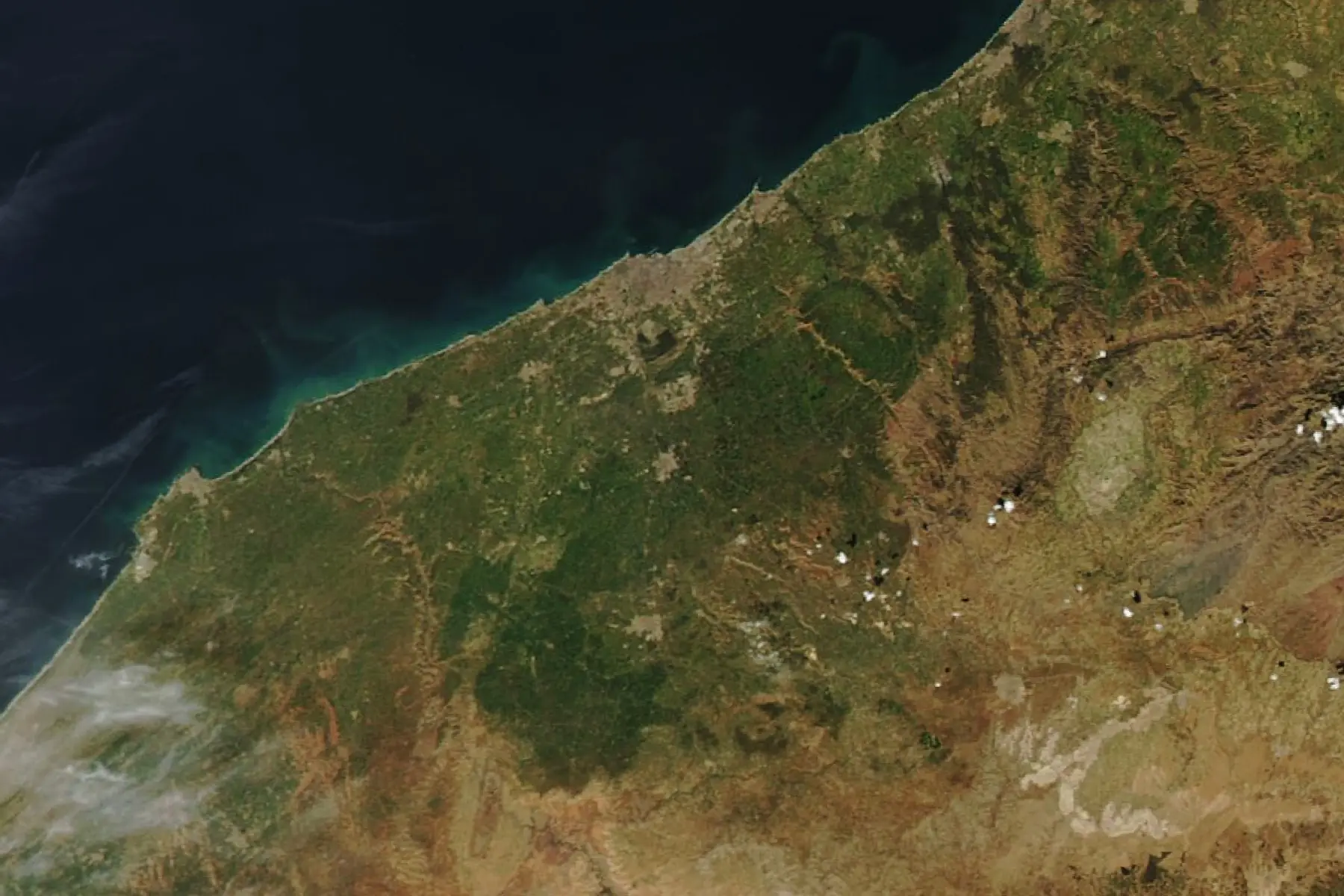
Satellite view of Morocco's Atlantic coast around Casablanca on 19 February 2024: farmland and hills parched by drought.
Drought in Morocco, 19 February 2024. The country's reservoirs were only 25% full. Image: NASA Earth Observatory (MODIS, Terra satellite)

Satellite view of Morocco's Atlantic coast around Casablanca on 19 February 2024: farmland and hills parched by drought.

Africa's warming, one stripe per year. Average land temperature across Africa, 1901–2025. Each stripe is one year: blue cooler, red warmer than average. 2024 was the warmest year, +1.66 °C above the 20th-century average.

Data: NOAA NCEI. Visualisation after Ed Hawkins' warming stripes.

Drought seen from space

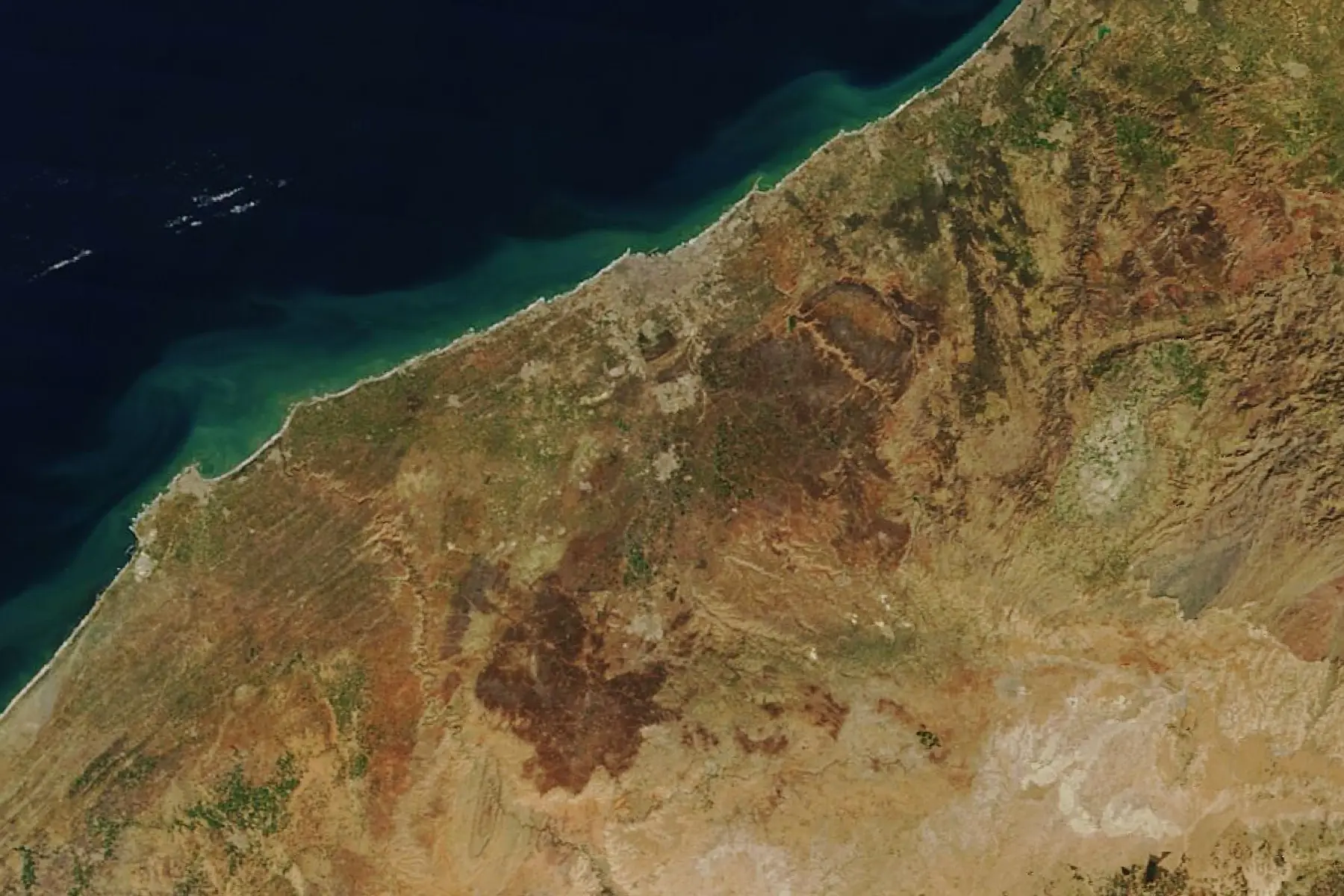
The same area around Casablanca, one year apart. Drought was already present in 2023, but crops were still green; by February 2024 fields and hills had turned brown, and the country's reservoirs had fallen from 32% to 25% of capacity.

Images: NASA Earth Observatory (MODIS, Aqua and Terra satellites)

The same area on 19 February 2024: fields and hills brown, parched by drought.February 2024
Satellite view of the Casablanca area on 12 February 2023: fields and hills still green.February 2023

Drag the handle, or pick a year.

Four Fundamental Objectives

Read the mission
  • Facilitate dialogue between scientists, policy makers and stakeholders, focused on the southern Mediterranean basin and Africa.
  • Integrate scientific knowledge into climate policy — NAPs, NDCs, carbon market, Loss & Damage, and AI for public policy.
  • Encourage interdisciplinary collaboration around the Water-Energy-Food-Ecology (WEFE) nexus.
  • Develop evidence-based recommendations to guide mitigation, adaptation, and climate-risk coordination.

Featured brief

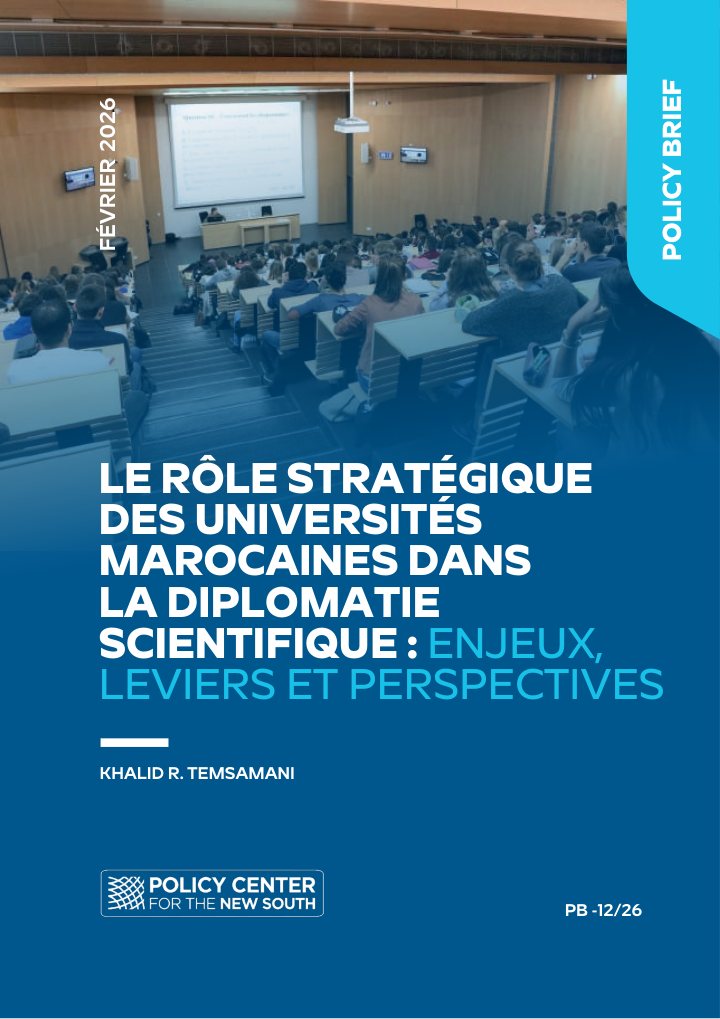
Policy Brief 12/26February 2026Khalid R. Temsamani

The Strategic Role of Moroccan Universities in Science Diplomacy: Stakes, Levers and Perspectives

The multiplication of systemic crises worldwide — environmental, health, energy or global-security — calls for a profound evolution in diplomatic action. In this context, structured integration of scientific knowledge into international relations becomes a determining condition for crafting effective and legitimate collective responses. This Policy Brief examines the capacity of Moroccan universities to embed themselves durably in this dynamic — beyond their traditional academic function — to assume an active role in producing expertise that can serve Morocco's external action.